
Fly Fishing for Bass, Pike, and Other Warm Water Species
A guide to the Connecticut River corridor and the fish many anglers overlook
Most fly fishers driving through Brattleboro have their eyes on the trout rivers to the north and west. They pass the Connecticut without stopping. That’s understandable — trout fishing carries a mystique that bass and carp haven't yet earned in the popular imagination. But the fishery running through this city is serious, accessible, and largely uncrowded. That combination is increasingly rare in New England.
This article is an introduction to what's in this water, how to approach it, and why it rewards the same disciplined thinking that makes a good trout angler.
Smallmouth Bass
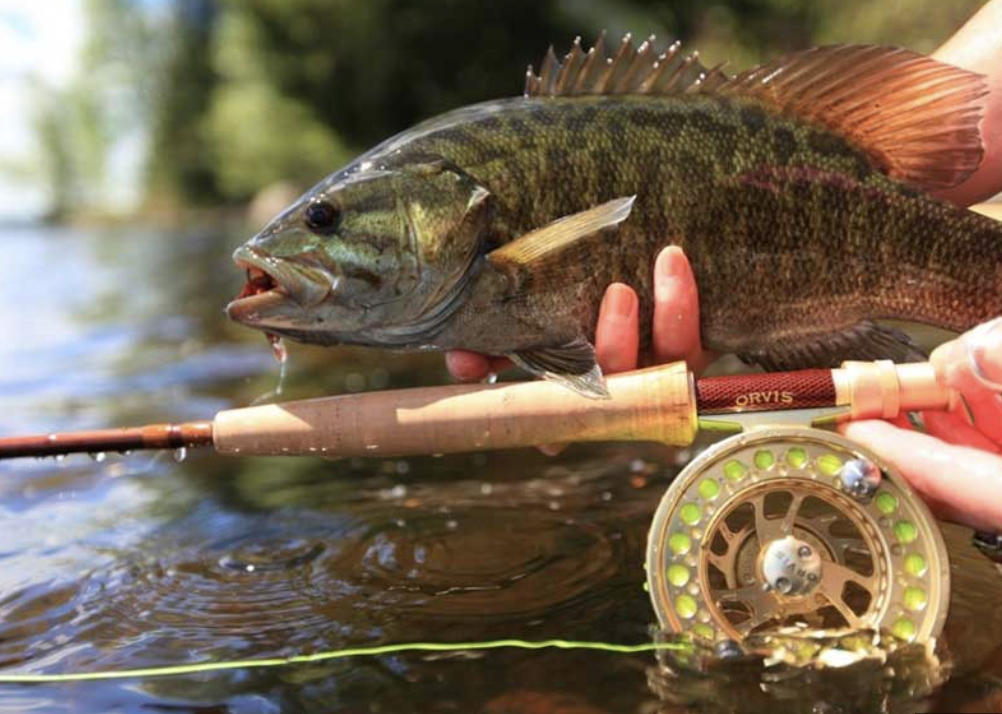
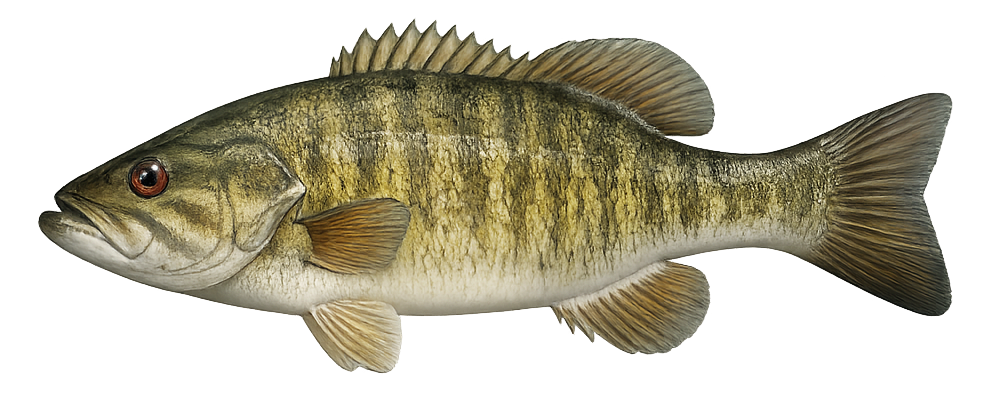
Smallmouth bass are the primary draw on the Connecticut River corridor through Brattleboro, and with good reason. They are aggressive surface feeders, highly visual, and — in moving water — legitimately technical targets. A smallmouth holding behind a mid-river boulder in moderate current is not going to eat a poorly presented fly. Like a brown trout, it has time to study what's coming.
The Connecticut's rocky structure and moderate gradient through this stretch provide ideal smallmouth habitat. Fish from two to four pounds are common; larger fish exist. Summer is the peak season, with activity shifting shallower in low-light hours and deepening as midday heat sets in. Early morning topwater fishing — poppers and deer-hair sliders worked slowly across current seams — is some of the most visually exciting fly fishing available anywhere in Vermont.
The West River, which empties into the Connecticut at the southern edge of Brattleboro, adds moving-water variety with its own smallmouth population and significantly different structure: tighter, with more pocket water character, demanding precise casting and downstream mending.
Tackle and approach: A 6-weight rod handles most Connecticut River smallmouth work. Leaders of 9 feet tapered to 10- or 12-pound fluorocarbon are appropriate. Flies to carry include deer-hair poppers in chartreuse or black, Clouser Minnows (olive/white or tan/white), crayfish imitations in rust and brown, and weighted woolly buggers for deeper structure. Reading current is central — presentation angles that place the fly just upstream of structure and allow it to swing into the strike zone produce more fish than straight retrieves across flat water.
Northern Pike
Pike are available in the slower backwater and oxbow sections of the Connecticut, and they represent an entirely different category of warm-water fly fishing. They are ambush predators — less about reading feeding behavior and more about covering structure efficiently with large, articulated flies that trigger a reaction strike.
Pike fishing on the fly is not delicate work, but it has its own discipline. Identifying the right water at the right time of year matters. Early and late season, when water temperatures drop into the upper fifties and low sixties, pike are actively hunting and most likely to respond to a well-stripped streamer. Midsummer heat pushes them deeper and makes them lethargic.
Tackle and approach: A 9-weight or heavier rod is appropriate. Wire tippet or a heavy fluorocarbon bite guard (60-80 lb.) is non-negotiable — pike teeth will cut through monofilament on the strike. Large articulated streamers in white, chartreuse, and perch patterns (three to six inches) stripped with irregular pauses are the standard approach. Stripping gloves are worth having; pike are handled differently than trout, and a proper grip matters both for the angler's safety and the fish's.
Largemouth Bass
Largemouth bass don’t get much attention from fly fishers in Vermont, and that’s largely a function of where they live. They aren't in rivers. They're in the ponds, lakes, and impoundments scattered through the hills of Windham County — quieter water, slower structure, a different kind of reading required.
The distinction between largemouth and smallmouth habitat is worth understanding. Smallmouth are current-oriented fish. They hold in rivers because they're built for it — streamlined, efficient in moving water, keyed to the same hydraulic features a trout angler already knows how to identify. Largemouth are structure-oriented fish. They hold in still or near-still water, relating to vegetation edges, submerged timber, dock pilings, and soft-bottom transitions where forage concentrates. The approach is less about reading current and more about reading cover.
Southeastern Vermont has significant largemouth habitat within reasonable range of Brattleboro. Harriman Reservoir, Sadawga Pond, and Somerset Reservoir all hold fish, and smaller private and semi-private ponds throughout Windham and Bennington counties harbor populations that receive little to no fly fishing pressure. These fish are not educated. A well-presented fly in good habitat will produce.
Tackle and approach: A 7- or 8-weight rod is appropriate, with a floating line for most surface and near-surface work. Largemouth are less leader-shy than carp and less current-sensitive than smallmouth, which makes the presentation requirements somewhat more forgiving — but forgiving doesn't mean careless. Accuracy to structure still matters. A popper dropped two feet short of a lily pad edge is not the same as one that lands six inches off the stems.
The largemouth is not a subtle fish, and that's part of its value as a teaching subject. When a bass commits to a surface fly, it commits completely. For anglers building their first fly fishing experience — or returning to the sport after time away — there is something clarifying about a strike that leaves no ambiguity. You know immediately whether the presentation worked.
That quality makes largemouth bass fishing an effective entry point into the broader fly fishing practice. The mechanics are the same. The margin for error is wider. The reward is immediate.
Why This Water Is Worth Your Time
The trout rivers of Vermont — the Battenkill chief among them — carry an identity built over generations. That identity is earned. But the Connecticut River corridor through Brattleboro has something those rivers don't: availability. Warm-water season runs from late May through October. The fish are active in conditions that send trout anglers home. There is no hatch chart to memorize, no temperature ceiling to monitor, no crowded access points during prime windows.
What it requires is the same foundation that makes any fly fisher effective: understanding how fish orient to current and structure, how to read the water, and how to present a fly in a way that looks natural and arrives in the right place. Those skills transfer completely from trout to bass to carp. The species changes; the discipline doesn't.
That's the right way to think about warm-water fly fishing in southeastern Vermont — not as a consolation fishery, but as an extension of the same practice.
Trico Unlimited will soon offer guided outings on the Connecticut River corridor and West River out of the BrattleFly shop in Brattleboro. Half-day and full-day bookings available seasonally.