
Trout of the Battenkill
Most rivers will tell you where the fish are. The Battenkill will not.
The Battenkill flows out of East Dorset in the Green Mountains, passes through Manchester, Sunderland, and Arlington, then crosses the Vermont state line into New York on its way to the Hudson. It is a small to medium-sized freestone river — narrow enough in places to cast across, wide enough in others to require reading the water carefully before committing to a wade. It is, by almost any measure, one of the most famous trout streams in the eastern United States. And unlike most rivers with that kind of reputation, its Vermont section holds no stocked fish. Every trout in that water is wild.
That distinction matters more than it might seem. It is what gives the Battenkill its character — and its difficulty.
The River’s Geology
Before the trout, there is the water. Part of what makes the Battenkill exceptional is geological. The Taconic Mountains that rise above the valley contain different rocks than the Green Mountains — limestone and marble bedrock that leach calcium and magnesium into the river, providing the mineral nutrients that support dense insect populations. Numerous springs feed the main stem throughout its length, delivering cold groundwater that keeps summer temperatures in a range trout can tolerate when other Vermont rivers become marginal. That combination — rich, cold, spring-fed water running over marble — is why the Battenkill has hatches, and why those hatches produce the kind of selective rising fish the river is known for.
The Brown Trout
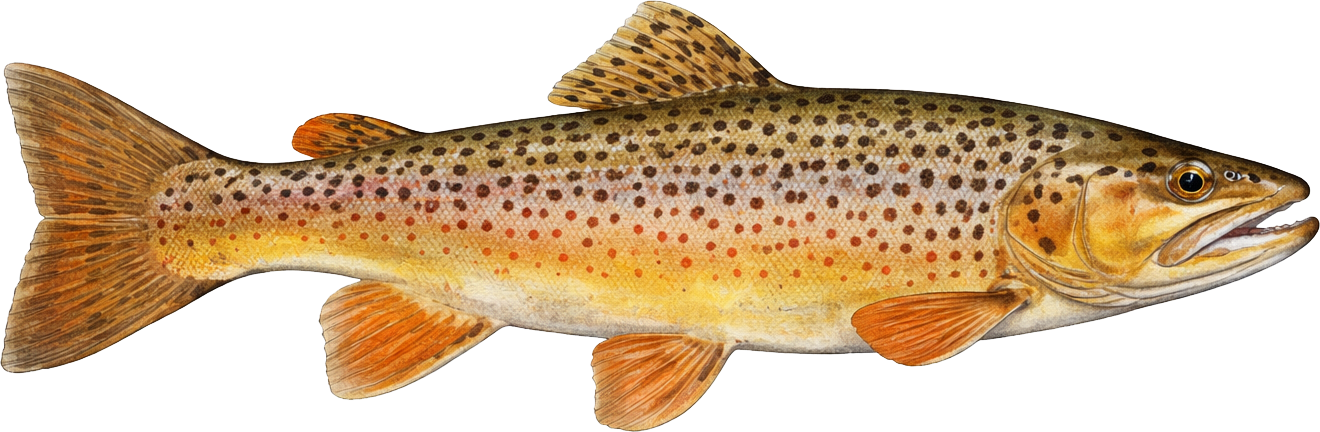
The wild brown trout is the Battenkill's signature species and the one that defines its reputation. Browns are not native to Vermont — they were introduced from European stock in the late nineteenth century — but they found in the Battenkill precisely the conditions they evolved for, and they have been here long enough now that calling them anything other than wild feels inaccurate. These fish have never seen a hatchery. They were born in the river’s gravel, survived its winters and floods, and they have been educated by generations of angling pressure in water so clear there is nowhere to hide from a poor presentation.
The Vermont section of the Battenkill is entirely catch-and-release for trout, a designation that has been in place since 2000. That policy has shaped the fish in a particular way: they have been hooked before, many of them more than once, and they are wary in proportion to that experience. A fourteen-inch Battenkill brown will inspect a fly the way a fish twice its size on a less-pressured river might, then refuse it on the finest technical grounds. As one longtime observer of the river put it, these are fish of the “fool me once, shame on you“ school.
Brown trout in the Battenkill hold tight to structure — undercut banks, submerged logs, the seam between fast and slow current. There is little midstream cover on this river, which means the fish concentrate along the edges, and it means that approach matters as much as presentation. The clear, silky currents the Battenkill is known for forgive nothing: a shadow on the water, a heavy footfall on the bank, a fly that drags even slightly through a feeding lane — any of these will end the conversation.
In terms of size, Battenkill browns have shifted over the decades. The river was historically known for an abundance of smaller fish, but populations have changed: brown trout are now scarcer but, on average, considerably larger. Twenty-inch fish are caught here every season, primarily on streamers and — for the patient angler willing to locate and stalk one — on dry flies during a hatch. They are not easy to find, and they are harder still to fool.
The best dry-fly fishing for brown trout runs from mid-May through mid-July, with peak conditions typically in late May and early June. Morning and evening sessions produce through the summer even when midday fishing slows in warmer temperatures. Fall fishing is uncrowded but historically less productive.
The Brook Trout
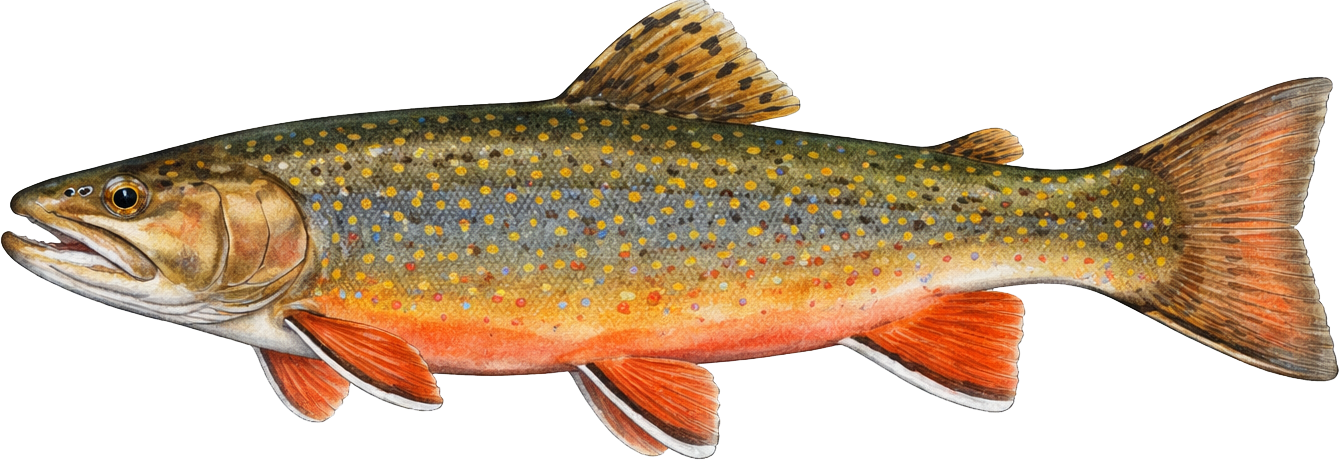
Vermont's native salmonid is present throughout the Battenkill system in numbers that are unusual for a river of this size. As one long-tenured observer of the river noted, the Battenkill is one of the last sizable eastern rivers outside of northern Maine to hold healthy populations of wild brook trout — and that has not changed significantly in thirty years. In the main stem's upper sections near Manchester, where the river runs smaller and the bottom is soft, brook trout are actually the dominant species. Further downstream, in the larger, deeper pools, browns take precedence, but brookies persist in cold tributaries and spring-fed pockets throughout the watershed.
Brook trout are native to this drainage in a way that no other fish here is. They have been in these waters since before European settlement, since before the valley was farmed or the river was named. Their continued presence is evidence that the Battenkill's cold-water character has been maintained — that the springs still flow, the riparian shade still holds, and the tributaries have not been compromised beyond the fish's tolerance.
On the main stem near Manchester, brook trout typically run small — a four-to-six-inch fish is common, and anything over ten inches is a trophy. But the fishing for them is intimate and forgiving compared to the technical demands the brown trout impose. Brookies respond more readily to a well-placed presentation and are less likely to scrutinize a tippet diameter. What they require instead is stealth — they are spooky in the way of small-stream fish everywhere, alert to movement, shadow, and anything that doesn't belong in their narrow world. Getting close enough to cast without alarming them is often the whole challenge.
Trout Unlimited has formalized restoration work in the Battenkill watershed in recent years, establishing the Battenkill Home Rivers Initiative in 2020 and completing habitat work on Camden Creek and other coldwater tributaries. That work — woody debris addition, riparian plantings, floodplain restoration — is directed in large part at maintaining and improving conditions for brook trout in the headwaters where the species is most at home and most vulnerable to warming trends.
What the Fish Ask of You
The trout of the Battenkill are a direct expression of the river’s conditions: clear, cold, rich in insects, unforgiving of inattention. The browns have been shaped by catch-and-release culture into some of the wariest fish on any eastern river. The brookies persist as a living record of what the watershed was before it was anything else.
Fishing here successfully — or even understanding why success is difficult — requires accepting the river's terms. A few fish per day is considered a good outcome by people who know this water well. The river is not measured in numbers. It is measured in the quality of the problem it poses and the satisfaction of working through it correctly, one cast at a time.
Trico Unlimited guides half-day and full-day fly fishing trips on the Battenkill and surrounding waters. All trips include instruction tailored to your experience level. Book a trip →